Mrs. Pumphrey
All Creatures Great and SmallMrs. Pumphrey, a wealthy widow on the outskirts of Darrowby, is both a generous and engaging host and a devoted owner whose indulgence repeatedly complicates the care of her animals. Her affection for Tricki Woo gives James Herriot a place in her household as a trusted veterinarian and honorary uncle; her later adoption of a pig extends that relationship into another comic, long-lived attachment.
Identity and Household
Mrs. Pumphrey is an elderly widow whose late husband had built a fortune through breweries and pubs across Yorkshire. He left her substantial wealth and a beautiful house near Darrowby, where she lives with a large staff, a gardener, a chauffeur, and Tricki Woo, her Pekingese and the particular focus of her affection. Her home’s comfortable drawing room, expensive furnishings, and attentive household stand in marked contrast to the rough conditions of Herriot’s farm calls. For him, a visit there offers warmth and hospitality as well as professional work; he even arranges his visits to coincide with the sherry served before lunch.
Her character is not reduced to wealth or eccentricity. Herriot describes her as likeable, intelligent, amusing, and generous to charities, with a willingness to help people in difficulty. The limitation he identifies is a blind spot where Tricki is concerned. Her devotion is real, but it distorts her judgment of what the dog needs. The same combination of kindness and indulgence later shapes her relationship with Nugent.
Tricki Woo and James Herriot
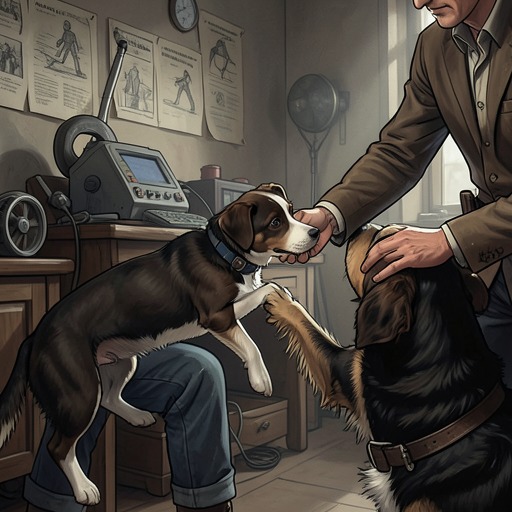
Mrs. Pumphrey treats Herriot not merely as a visiting professional but as a member of Tricki’s imagined family. She introduces him to the dog as his Uncle Herriot, and he accepts the title, recognizing the advantages of the affectionate role. Tricki greets him with conspicuous enthusiasm, while Herriot becomes genuinely fond of the dog and values the visits. Their connection rests on both medical trust and the domestic welcome that accompanies it.
That welcome does not prevent Herriot from confronting the consequences of Mrs. Pumphrey’s care. During one examination, he notices that Tricki has gained weight and tells her again to reduce the cakes and improve the balance of his food. She pleads that the dog has tired of chicken, but the pattern is clear: her anxiety about his condition repeatedly leads her to offer more treats rather than follow the veterinary advice. Herriot’s professional attention and personal affection therefore pull in the same direction, even when he must challenge his host.
Mrs. Pumphrey’s imagination also gives Tricki an elaborate social life. She tells Herriot that the dog has written to the editor of Doggy World, describing himself as descended from Chinese emperors and adopting the name Mr. Utterbunkum for correspondence. A letter from the editor proposes Bonzo Fotheringham, a lonely Dalmatian, as a pen pal. She recounts the exchange as exciting news, while Tricki sleeps on Herriot’s lap. Her account makes the dog a character in a miniature world of aristocratic ancestry, correspondence, and friendship.
Hospitality, Performance, and Anxiety
The same imaginative attachment turns an ordinary invitation into a social occasion. Tricki sends Herriot a formal invitation to a party on February 5, requesting his company for drinks and dancing. Siegfried Farnon urges him to accept and emphasizes that the invitation comes from the dog himself; Herriot is advised to write to Tricki rather than to Mrs. Pumphrey. At the house, Mrs. Pumphrey is receiving a gathering of guests, but she greets Herriot with particular delight and takes him to see Tricki first. The dog, she explains, finds the party tiresome, though he would be displeased if Herriot were not brought in.
The scene condenses the household’s affectionate pretence and its material reality. Tricki is curled beside a fire, delighted to see Herriot, while two substantial bowls of food wait beside the chair: one of chopped chicken and one of crumbled cake. Mrs. Pumphrey’s welcome is sincere, but so is the excess that undercuts her confidence in her pet’s health. Her household turns affection into ceremony, and Tricki’s imagined social importance is matched by an abundance that has tangible consequences.
Those consequences become stark when Herriot sees Tricki in the street with his mistress. The dog has become enormously overweight and appears listless; Mrs. Pumphrey explains that she had feared malnutrition and added calf’s-foot jelly, malt, cod-liver oil, and Horlick’s at night. Herriot asks whether she has reduced the sweet foods as he instructed. Her account shows how concern, untempered by sound judgment, has intensified the very problem she meant to address.
After Tricki’s recovery under veterinary care, Herriot tells Mrs. Pumphrey that the dog is ready to be collected. Her response reveals the depth of her attachment: she arrives in the chauffeur-driven car with her hands clasped and lips trembling, and asks whether Tricki is truly better. The reunion matters to her as much as the medical outcome. The episode also exposes a recurring contrast in her character: she can be generous and loving, yet her anxious attempts to protect an animal can require Herriot to intervene firmly.
Nugent and a Second Attachment
Mrs. Pumphrey’s affection is not confined to Tricki. She acquires a six-week-old piglet while visiting farmer cousins and wants Herriot to examine him for soundness. She explains that the pig will keep Tricki company, since she worries about the dog being an only pet. Herriot is initially taken aback by the idea of a pig in her elegant household, but finds the tiny animal in a cardboard box in the kitchen. Mrs. Pumphrey names him Nugent after a great-uncle, whose appearance she considers strikingly similar to the pig’s.
Herriot examines Nugent and pronounces him sound, while insisting that he cannot live inside the house. Mrs. Pumphrey is initially appalled, then accepts the advice when Herriot reassures her that the pig will be healthier and happier outdoors. Nugent’s care becomes another household responsibility: the gardener, Hodgkin, is assigned to feed and bed him down and supervise his play. Hodgkin persistently calls him Nudist, an unintended distortion of the name that accompanies the pig through his life.
Mrs. Pumphrey later telephones Herriot in alarm, saying Nugent is terribly ill. Her stricken manner recalls earlier reports of Tricki’s invented or unusual complaints, but Herriot finds the pig well and happy. The incident adds another small reversal to her pattern: intense concern can outrun the animal’s actual condition. It does not, however, diminish the attachment. Nugent enjoys a long and happy life, is as generous with presents as Tricki, and becomes another creature Herriot genuinely likes. Herriot keeps a signed photograph of the pig from Siegfried, whose sardonic attitude makes such gifts awkward to disclose.
Character and Narrative Role
Mrs. Pumphrey brings together the comforts of a wealthy household and the recurring comic mismatch between human interpretation and animal need. Her parlour stories, formal invitations, elaborate food, and concern over seemingly momentous symptoms give the veterinary narrative a domestic counterpoint to the hard routine of farm work. Herriot benefits from her hospitality, but his professional role repeatedly requires him to distinguish care from excess and anxiety from evidence.
Her animals are not interchangeable ornaments in that pattern. Tricki receives a sustained relationship with Herriot, complete with the title of uncle, correspondence, parties, and a period of serious overfeeding followed by recovery. Nugent enters the household because Mrs. Pumphrey wants a companion for the dog, yet becomes an attachment in his own right, with his own examination, daily care, presents, and long life. Through both animals, her warmth is shown as a genuine bond while her blind spot remains consequential. The comedy depends on that double truth: she loves them deeply, and loving them does not always mean knowing what they need.